
How are our crops raised?
This is a common question we get asked by customers and one that we are happy to answer because, like Richard, we enjoy educating our customers and the public on where their food comes from and how it’s produced. We as farmers have a balancing act to perform when it comes to costs, workload, equipment, and methods of production. All of these things have to be considered when we are determining what crops to grow and the way we need to grow them in order to achieve our goals of providing high quality, fresh, and great tasting produce, while keeping it safe and the price affordable. Additionally, because we try to make our product available to as many people as we can, we have to consider scale when making these decisions. The reality is the growing practices on 1 acre and 30 acres are not the same. We always do our best to be good stewards of the land and we take great care to grow fruit and vegetables that are safe and delicious because we care about your health as well as our own.
Is it organic?
By definition, we are a conventional farm not organic, though we do utilize many of the same growing methods as organic farms. We plow and perform tillage to break up soil compaction and aerate the soil, but we try not to do this too far in advance of laying plastic mulch or planting in order to reduce erosion. We use commercial fertilizer and incorporate it into the soil to prevent nutrient runoff. We also use foliar applied fertilizers after plants are in the field that get more nutrients to the plant right when they need it. Similar to most organic farms we do use manure, but because we want to prevent any crops being exposed to pathogens in the manure, we apply it in the fall or incorporate into the soil immediately so the produce is never coming in contact with the manure.
Do you use pesticides?
Yes, we do use them. Organic farms use them too, just not all the same types that we use. Unfortunately, not all of the organic products are as effective as conventional pesticides, thus leading to more applications for the same level of control that conventional sprays provide. Even though we use pesticides we try to keep their use to a minimum, because of exposure and cost, they are not cheap, so we definitely are not applying them “just because”. We try to use the most effective products we can, and only when crop loss is possible. We are also very strict about following Pre-Harvest Intervals and Re-Entry Intervals set forth by the manufacturers and the Ohio Dept. of Ag, in order to keep you and us both safe. In an effort to reduce pesticide use further, we utilize weed cultivating, manual removal of weeds, plastic mulch, disease resistant plant varieties, and insect covers on certain crops. While we are not certified organic, most of our crops never come in contact with pesticides.
Is it a GMO?
There are actually very few available vegetables that are GMO. Most vegetable varieties are traditionally bred hybrids, open pollinated or heirloom varieties that have been around for a long time. The varieties that we plant are mostly hybrids and we select for them high disease resistance, to reduce the amount of pesticides needed. The one exception is a GMO variety of sweetcorn that we plant in our last planting for fall harvest. It is has a naturally occurring BT trait to combat ear worms without having to apply several applications of insecticide. The decision to switch to this variety for planting late in the season was based on several years of customer feedback.
When does our season start?
Our season gets an early start every year, usually around the middle of February, because we buy seed and start most of our plants in our greenhouses, as opposed to buying plant starts. We do this for everything except corn, beans, peas, and cucumbers which are direct seeded in the fields. As early as the weather allows in the Spring, we begin tilling the fields and applying plastic mulch (some of which is biodegradable) in order to reduce erosion, warm the soil, retain moisture in dry conditions, and help reduce the amount of weeds that have to be controlled. Field planting is a long process, due to our multiple succession plantings and the large variety of crops we grow. Our planting season usually starts mid-April and goes through mid-July. Harvest begins with strawberries in May and concludes with pumpkins in October. All of our crops are hand harvested and are picked daily or every other day, depending on the crop, in order to maintain freshness. After harvest is complete there is still a lot to do before winter such as mowing fields, removing plastic mulch, applying manure, putting away supplies, and cleaning equipment. Ah winter – time to kick back and relax…NOT! Winter is slower but that is when all the repairs, expansion projects, and planning for the next season occur.
Hopefully this gave you some insight into the way your vegetables were grown. If you buy from us or anywhere else we encourage you to ask questions and be an informed customer. If a “grower” is unwilling to answer your questions, maybe rethink your purchase
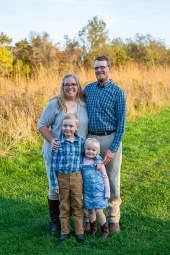
 Birney's Miracle Farm Market